Sidewalk Astronomy and Public Outreach in Tucson
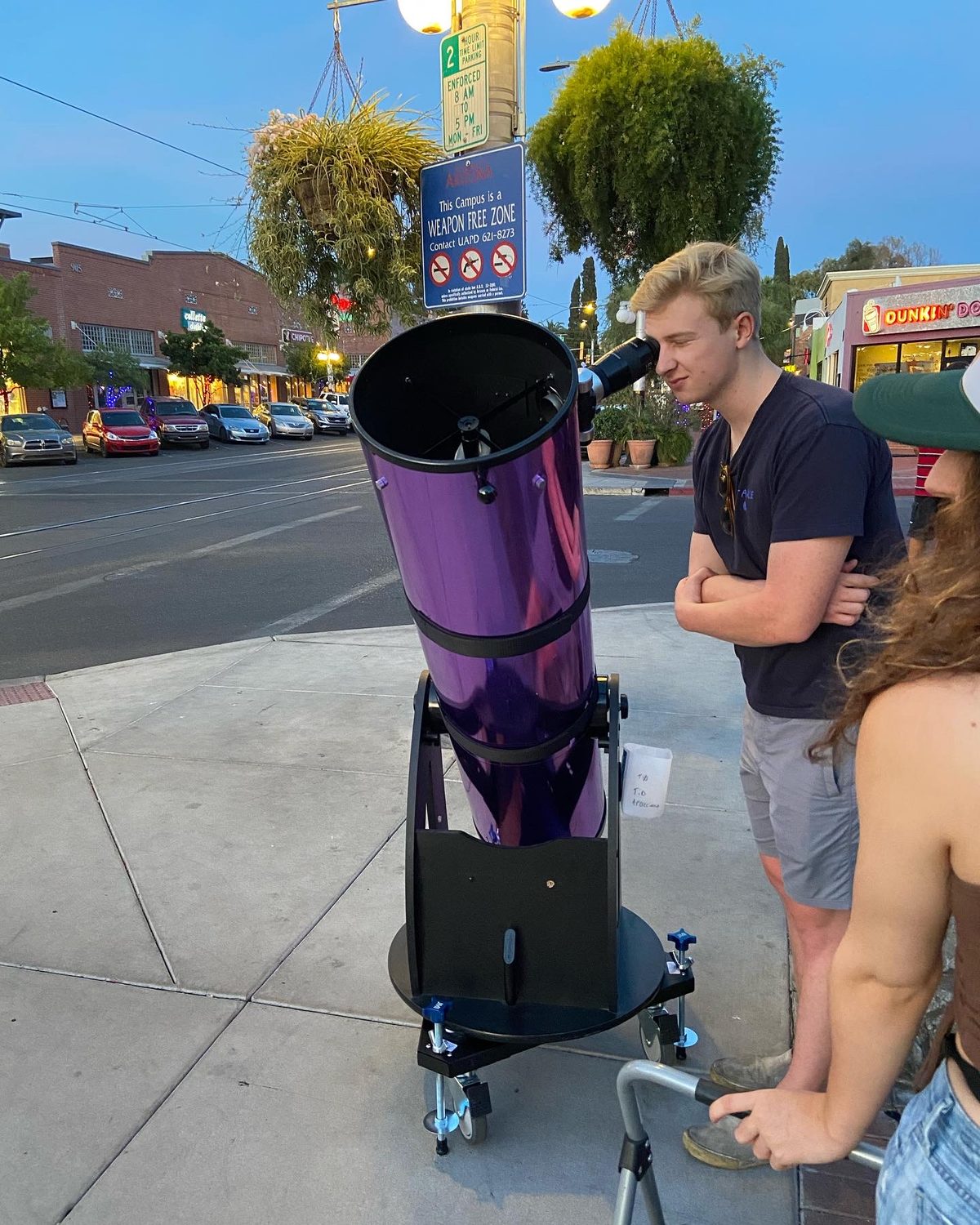
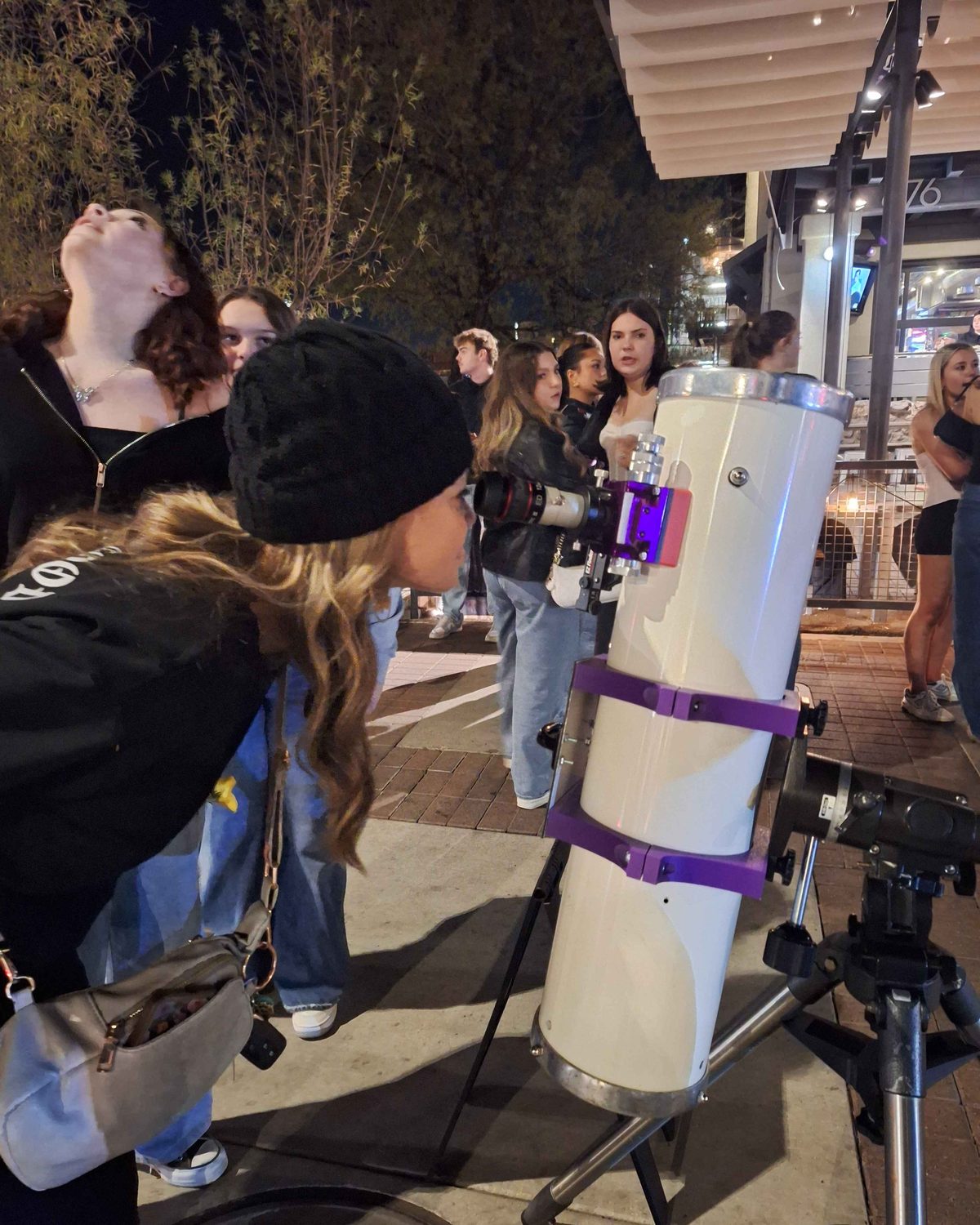
Sidewalk astronomy is about as simple as astronomy gets. You put a telescope on a busy sidewalk, point it at the Moon or a planet, and let anyone walking by have a look. It’s free, and nobody has to plan anything.
I have been doing it in Tucson since 2022, mostly on University Boulevard next to the University of Arizona, and at public star parties around town.
Why it matters
- A lot of people have never looked through a telescope. Many of the people who stop are seeing Saturn’s rings or the Moon’s craters with their own eye for the first time.
- It reaches people an astronomy event never will. Star parties and observatory nights draw people who already care. A sidewalk gets whoever is walking to dinner.
- You don’t need a dark sky for it. The Moon and planets look the same from a lit street as they do from the desert.
- It’s the best case for dark skies. Someone who has just seen Saturn is a lot easier to talk to about why the night sky is worth protecting.
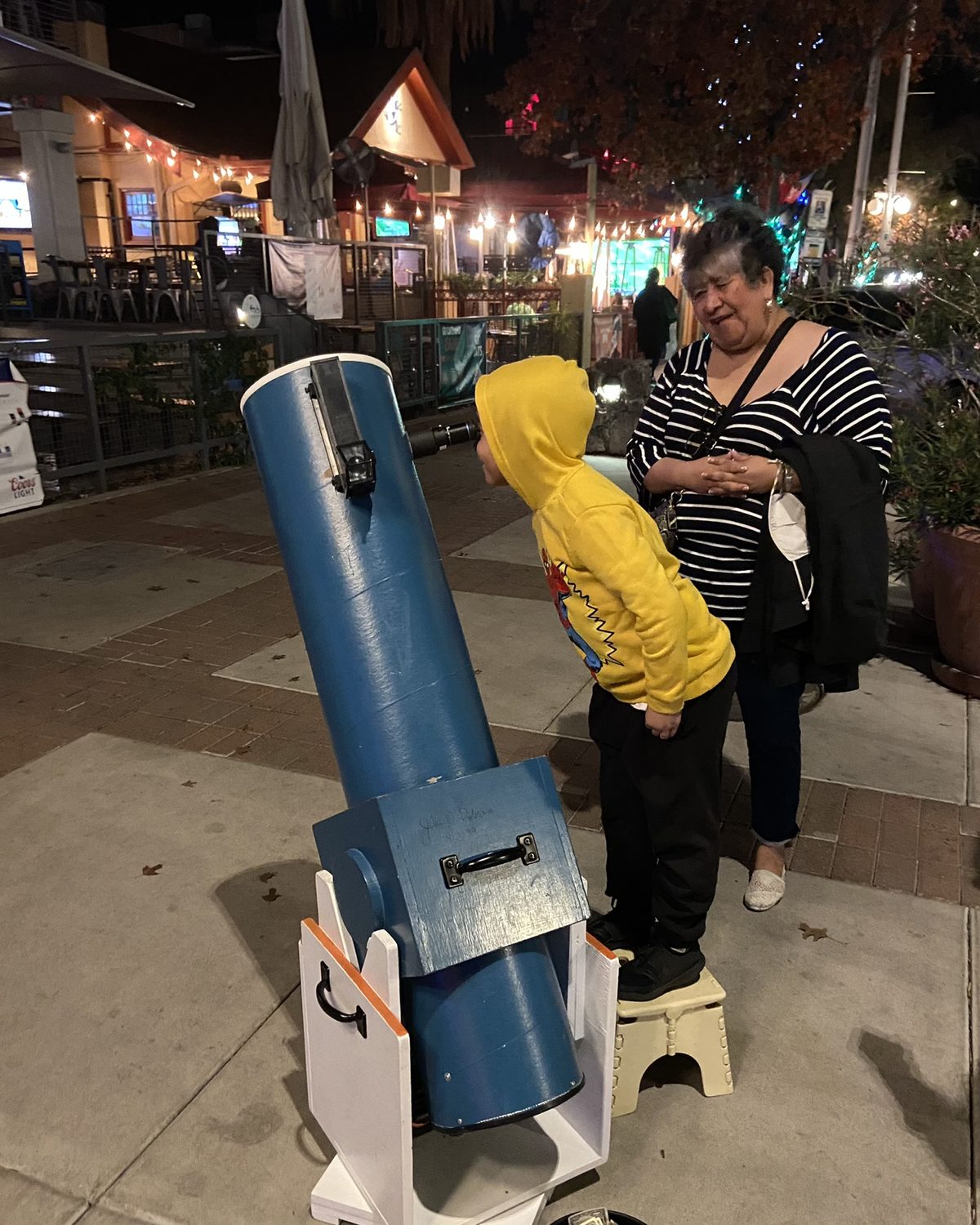
None of this is my idea. John Dobson and the San Francisco Sidewalk Astronomers started doing it in the 1960s with big, cheap telescopes that anyone could build. The Dobsonian telescope is named after him.
What I bring
My big telescopes stay home for this. The targets are bright, and a telescope a kid can reach beats a bigger one on a ladder.
- 8" Dobsonian. Simple and sturdy, and it shows plenty. With a step stool, kids can use it on their own.
- 6" f/4.3 Newtonian. The first telescope I made, with a mirror I ground in 2017.
- SVBONY MK127. A small Maksutov that is very sharp on the Moon and planets.
What you can see from a sidewalk
- The Moon’s craters and mountains, best around first quarter.
- Saturn’s rings.
- Jupiter’s cloud bands and its four big moons.
- The phases of Venus.
- Bright double stars like Albireo.
Common questions
What is sidewalk astronomy? Setting up a telescope somewhere busy, like a sidewalk, and letting anyone walking by look at the Moon or a planet for free. John Dobson and the San Francisco Sidewalk Astronomers started it in the 1960s.
Where does Zane Landers do sidewalk astronomy in Tucson? Mostly on University Boulevard next to the University of Arizona, and at public star parties around Tucson. There is no fixed schedule. It depends on the weather and on what is up.
What can you see through a telescope from a city sidewalk? The Moon’s craters, Saturn’s rings, Jupiter’s cloud bands and its four big moons, the phases of Venus, and bright double stars. City lights don’t hurt any of these.
Does it cost anything? No. Sidewalk astronomy is free. For a private or hosted evening, see the star party page.
Want telescopes at your event?
If you run a public or community event in Tucson and want telescopes there, get in touch. For a private evening or a hosted night at a venue, see star parties.